
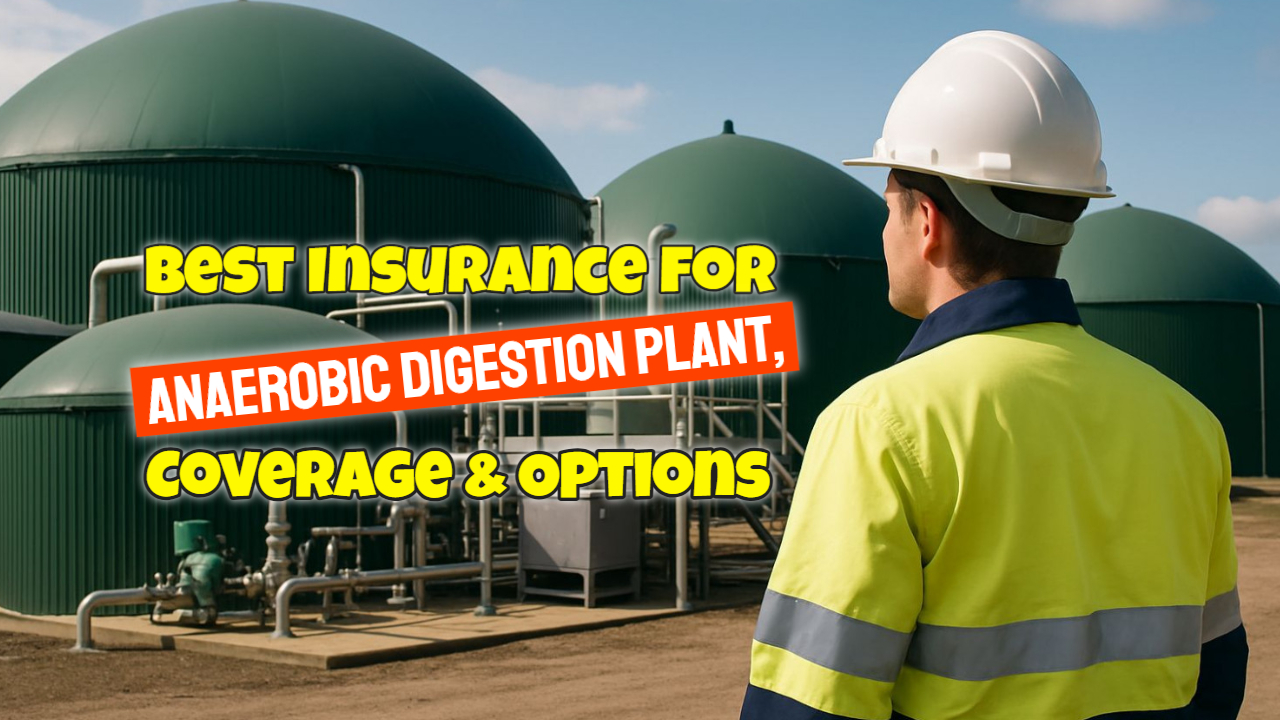
Anaerobic digestion (AD) plant insurance provides comprehensive coverage for the construction, operation, and maintenance of biogas facilities, protecting against risks like equipment breakdown, fire, and revenue loss.
A Quick Look at Anaerobic Digestion Plant Insurance
- Standard commercial general liability policies almost always have pollution exclusions, leaving AD plant operators exposed to claims about methane leaks and digestate contamination.
- Specialist UK insurers like Chubb offer dedicated biogas and solar packages that cover construction, operation, environmental liability, and business interruption under a single policy.
- The minimum total insured value threshold for most specialist AD plant policies in the UK starts at £1 million.
- Digestate spreading, odour complaints, and compressed gas transportation are three coverage gaps that most operators don’t discover until it’s too late.
- The type of feedstock you process — food waste, agricultural slurry, or crop residues — directly affects your premium and what insurers will and won’t cover.
Running an anaerobic digestion plant without the right insurance is like operating a pressure cooker without a safety valve — it works fine, right up until it doesn’t.
With the rise of the AD industry in the UK, there are now hundreds of operational plants that convert organic waste into biogas and biomethane. These plants not only power homes and fuel vehicles, but also generate feed-in tariff revenue. However, the complexity of the process, which involves volatile gases, biological waste, high-pressure equipment, and exposure to the environment, means that most standard business insurance policies are not designed to handle the risk profile. For UK operators looking to get this right, specialist AD plant insurance brokers can make the difference between comprehensive protection and a policy full of gaps that only become apparent when a claim is made.
Why General Commercial Insurance Doesn’t Work for AD Plants
When they first go looking for insurance, a lot of AD plant operators start by talking to a general commercial insurer. That’s a natural first step — it’s what you’d do if you were insuring a warehouse, a coffee shop, or a trucking company. But an anaerobic digestion plant isn’t a typical commercial business, and a typical commercial insurance policy shows that — and not in a good way.
The main issue: A standard Commercial General Liability (CGL) policy is meant for businesses that don’t typically deal with poisonous gases, generate biological waste, or run high-pressure containment systems. As soon as an AD plant event includes any of these factors, the insurance company has a reason to invoke exclusions – and they will.
What you’re left with is a policy that seems comprehensive on paper, but leaves your plant vulnerable in precisely the areas where claims are most likely to occur. Knowing where these gaps are is the first step to addressing them.

Why General Liability Policies Are Not Enough
General liability policies provide coverage for third-party bodily injury and property damage in simple situations. They cover incidents such as slips and falls, product liability for a physical item, and damage to a client’s property during a service visit. These are the types of claims that a CGL policy is designed and priced to cover.
AD plants have risks that are far beyond the usual. Biogas is made up of 50–70% methane and 30–40% carbon dioxide, with a small amount of hydrogen sulphide. A leak is not only a fire risk, but it’s also a pollution event. As soon as your insurer labels a claim as pollution-related — and they almost certainly will for gases escaping from a biodigester — a standard CGL policy gives the insurer an easy way to say no. To better understand the importance of insurance in these scenarios, you can explore anaerobic digestion insurance coverage options.
In addition to gas leaks, the daily operation of an AD plant includes feedstock intake, biological processing, and the production and storage of digestate. Each stage has liability risks that a general liability underwriter may not be able to adequately assess, price, or cover. For more detailed information on coverage options, you can explore anaerobic digestion insurance coverage.
Why the Pollution Exclusion Clause is an Issue
For anyone operating an AD plant, the pollution exclusion is the most hazardous part of a regular liability policy. It normally excludes coverage for property damage or bodily injury that results from the release, discharge, dispersal, or escape of pollutants. Courts have interpreted “pollutants” to include biological effluent, hydrogen sulphide, and methane.
These are not just hypothetical risks. If digestate from your plant runs into a nearby water body, if methane from your plant spreads to a nearby property, or if the smell from your plant causes a nearby resident to experience health problems, the pollution exclusion gives your insurer a solid reason to deny both the costs of defense and the settlement. In the worst case scenario, you face enforcement action by the Environment Agency and a civil lawsuit without any insurance coverage.
The Risk of Not Having Specialized Insurance
AD plant operators who do not have specialized insurance are vulnerable in many ways at once. One incident, such as a digester failure that releases digestate into a nearby stream, can lead to an investigation by the Environment Agency, third-party civil claims from landowners who were affected, and a business interruption loss while the plant is not operating. A regular commercial policy might cover a small part of that risk, or none at all.
It can be financially crippling to the point of threatening the entire operation’s viability. Regulatory fines, remediation costs, legal defense fees, and lost revenue from interrupted generation or gas sales can accumulate quickly. This is exactly why specialist insurance exists.
Understanding the Risks of Operating an AD Plant
Before choosing an insurance policy, it’s important to understand the unique risks associated with operating an AD plant. AD plants have a unique set of risks that differentiate them from traditional industrial sites and other renewable energy plants.
The Dangers of Methane Leaks and Explosions
Methane is the main product of anaerobic digestion, and it’s also the most dangerous. It has no colour or smell in its pure form, and it can catch fire if it makes up 5–15% of the air. A leak from a digester, gas holder, or pipes can cause an explosion and pollute the environment. In the UK, the law says you must have systems to detect gas and manage pressure. But if equipment breaks, seals wear out, or you don’t do maintenance properly, you could have a leak. For more information on how to protect your investment, consider exploring anaerobic digestion insurance coverage options.
From an insurance perspective, methane leaks are a complex issue. They can cause property damage, create liability, and result in pollution. Therefore, a specialist policy is needed to cover all three areas.
Environmental Hazards of Digestate Spillage
As a result of the AD process, a nutrient-dense byproduct called digestate is produced. If handled properly, it can be a fantastic biofertiliser. However, if the storage tank overflows, the spreading equipment malfunctions, or severe weather occurs, the containment can fail, turning it into a significant environmental risk. If digestate enters a watercourse, it can deplete oxygen and kill aquatic life, leading to enforcement by the Environment Agency and substantial remediation costs.

When Equipment or the Process Breaks Down
An anaerobic digestion plant is a complex system of interconnected equipment. This includes the feedstock reception and pre-treatment systems, the primary and secondary digesters, the combined heat and power (CHP) units, the gas upgrading equipment, and the digestate handling machinery. If any of these parts fail, the whole process can stop.
CHP units are especially high-value and high-wear components. If a 500kW CHP unit’s engine fails, the repair costs could reach tens of thousands of pounds. Plus, you’d lose the revenue you’d normally generate while the unit is being repaired. So, machinery breakdown coverage isn’t just a nice-to-have for an AD plant. It’s a must-have.
Disruption in Feedstock Supply Leading to Business Interruption
Anaerobic digestion isn’t like solar or wind energy. It needs a constant supply of organic feedstock. If your main feedstock supplier — such as a food manufacturer, supermarket distribution centre, or farm — stops delivering because of their own operational problems, your plant’s gas output will fall, and so will your income. When you’re thinking about business interruption cover for AD plants, you need to think about this supply chain dependency, not just equipment failures on-site.
Key Insurance Coverage for Anaerobic Digestion Plants
A well-structured insurance plan for an anaerobic digestion plant is more than just one policy — it’s a set of interrelated coverages, each addressing a specific risk. The gaps between poorly chosen policies can be as risky as having no coverage at all.
1. Environmental Liability Insurance
Environmental liability is a must-have for any AD plant insurance policy. This coverage protects you from third-party claims and regulatory costs that come from pollution incidents — the very situations that a standard CGL policy does not cover. It pays for the investigation and cleanup of contamination, third-party bodily injury and property damage from pollution, and the legal defense costs associated with both.
In the UK, this coverage also needs to comply with the Environmental Damage (Prevention and Remediation) (England) Regulations 2015, which can levy substantial remediation obligations following incidents that affect land, water, or protected species. A specialist environmental liability policy is designed with these obligations in mind; a standard commercial policy is not.
2. Machinery and Equipment Breakdown Insurance
Machinery and equipment breakdown insurance, also known as plant and machinery insurance or equipment breakdown cover, protects against the unexpected and sudden failure of mechanical and electrical plant. In an anaerobic digestion (AD) plant, this includes CHP engines, gas compressors, pumps, heat exchangers, gas upgrading systems, and digesters. The operative word is sudden: gradual deterioration, wear and tear, and maintenance-related failures are usually not covered. This is why having a strong planned maintenance program is as important to your insurance company as it is to your engineers.
The best insurance policies for anaerobic digestion plants go beyond just covering the cost of repairs. They also cover the loss of revenue while your equipment is being repaired. This is crucial because a CHP engine overhaul can take weeks. During that time, your feed-in tariff or biomethane sales don’t stop. So, it’s worth it to pay a little extra for insurance that covers this extended downtime.
3. Coverage for Construction and Builder’s Risk
When an AD plant is being built, it has different risks compared to one that’s already running. In the UK, there’s Contractors All Risk (CAR) insurance, which is the same as builder’s risk coverage. It protects the physical work, plant, and materials during the time when the plant is being built and commissioned. This is important because standard property policies only start at practical completion. Everything before that needs specific construction coverage.
For projects with a total insured value of over £1 million — a category that includes almost all commercial AD plants — specialist markets such as Chubb’s biogas and solar package are designed to cover both the construction and operational phases, offering continuous coverage instead of requiring a change of policy at commissioning.
4. Business Interruption Insurance
When it comes to Business Interruption (BI) coverage for your AD plant, you have to be very careful about how you structure it. The indemnity period, which is the amount of time the policy will cover lost revenue, should be in line with the worst-case scenario recovery timeline for your most important piece of equipment. For a large CHP unit or a primary digester, this could easily be 12 to 24 months, especially when you consider the lead times for specialist parts and equipment.
In addition to equipment failure, business interruption coverage should also ideally extend to include loss of feedstock supply from a specific supplier, grid connection failures, and denial of access to the site due to an incident in the vicinity. These extensions are not always included by default, but a specialized broker will know which insurers offer them and how to get them priced into your plan.
5. Public and Employers Liability
Public liability and employers liability are legal requirements for any operating business in the UK, and an AD plant is no exception. Public liability covers third-party bodily injury and property damage claims that don’t involve a pollution element — a contractor injured during a site visit, for example, or damage to a neighbouring property from a non-pollution incident. Employers liability, mandatory under the Employers’ Liability (Compulsory Insurance) Act 1969, covers your workforce for injuries and illnesses sustained in the course of their employment. Both should be in place from day one of site operations.
Insurance Tailored to AD Plant Equipment
Equipment is the lifeblood of an AD plant, and getting the right insurance for it requires a more detailed approach than a standard commercial property policy can offer. The variety of plant involved — from large, fixed civil structures to mobile farming machinery — covers many insurance categories, and each category has its own underwriting factors to consider.
It’s helpful to divide equipment coverage into three separate categories when considering it:
- Fixed plant: Digesters, gas holders, CHP units, gas upgrading systems, and control infrastructure
- Mobile plant: Wheeled loaders, feedstock handling equipment, digestate tankers, and spreading machinery
- Pipework and compression infrastructure: Gas pipelines, compressors, pressure regulation equipment, and any biomethane injection infrastructure connecting to the gas grid
Each of these categories presents different risks, attracts different underwriting appetites, and may need to be placed with different insurers within an overall programme. A specialist broker’s value lies largely in knowing which markets to approach for each element and how to structure the programme so that the covers interlock without gaps.
Fixed Plant: Digesters, Gas Holders, and CHP Units
Fixed plant equipment is usually the most valuable insured item on most AD sites. A primary mesophilic digester on a commercial food waste facility might be worth £500,000 or more to replace; a 1MW CHP installation can easily be worth £800,000 to £1.2 million. These assets need to be insured on a full reinstatement basis — not market value — to ensure that a total loss doesn’t leave you underinsured when you need full cover the most. Specialist machinery breakdown policies for CHP units should also include cover for consequential damage: if a lubrication failure destroys an engine and debris damages the generator, both losses need to be covered under the same policy.
Machinery for Mobile Plant: Feedstock Handling and Digestate Spreading
Mobile plant machinery used on an AD site — such as telehandlers, loading shovels, digestate tankers, and umbilical spreading equipment — falls into a unique insurance category. If the machinery is used on public roads, it needs to have motor trade or agricultural vehicle coverage, as well as plant and machinery insurance. Digestate spreading equipment presents a double risk: mechanical breakdown on one hand, and environmental liability from spreading failures on the other. These two risks often need to be covered in separate policy sections, a detail that is often overlooked by general commercial insurers. Make sure both are covered.
Insurance for Pipelines and Gas Compression Equipment
There are some anaerobic digestion plants that turn biomethane into a vehicle fuel or inject it into the National Gas grid. This process requires the use of pipelines and gas compression equipment, and these pieces of infrastructure have their own insurance needs. For example, you can get premises pollution liability insurance to cover any leaks that might occur in the on-site pipework. And if you’re transporting compressed natural gas in distribution vehicles, you’ll need to consider the additional liability exposure. This is especially true when the gas is being unloaded and dispensed at fuel stations.
When biomethane is introduced into the public gas network, it must be pressurized to match the operating pressure of the pipeline. There is a real danger of leaks occurring at compression points or along the injection pipeline, and standard property policies rarely include coverage for the environmental impact of a gas leak at this stage. Premises pollution liability, arranged by a specialist with experience in biomethane injection, directly addresses this issue.
Top Insurance Companies to Consider
In the UK, there are only a few insurance companies and wholesale brokers that truly comprehend the AD plant insurance market. If you go to a general insurance company for this type of risk, you’ll likely get a quote that’s either declined or includes so many exclusions that the policy is basically useless. There are two companies that UK AD operators consistently turn to when they need specialized coverage.
Chubb Biogas and Solar Package
Chubb has released what they call the first biogas and solar insurance package in the world, which is specifically designed for the construction and operation of anaerobic digestion facilities and photovoltaic solar farms. This package is available to companies in the UK that operate AD and biogas plants or photovoltaic solar facilities, as long as the operation has a project value or total insured value of at least £1 million. The coverage in this package includes primary liability, environmental risks for both new and historical pollution issues (including biodiversity damage and odour claims), crisis management costs for incidents like outages and leaks, and business interruption. The fact that this package combines all of these elements into one structured package, instead of forcing operators to put together separate policies, is a huge practical advantage.
Travelers Bioenergy Insurance Program
Travelers runs a specialized bioenergy insurance program to cater to the unique risks of biopower operations, including anaerobic digestion. The program is built on the understanding that standard commercial policies leave bioenergy operators vulnerable, and it offers specialized coverages across liability, property, and business interruption lines.
When it comes to insurance for your anaerobic digestion plant, two specialist packages stand out: the Chubb Biogas & Solar Package and the Travelers Bioenergy Programme. Here’s a quick comparison of their key features:
Feature Chubb Biogas & Solar Package Travelers Bioenergy Programme Who it’s for UK-based AD and solar operators Bioenergy operators including AD Minimum insured value £1 million TIV Not publicly specified Construction phase cover Yes Available Environmental liability Yes, including historical pollution Yes Odour claims Explicitly included Covered under pollution liability Business interruption Yes Yes Crisis management costs Yes Yes
While both of these options offer a lot more than your standard commercial insurance, they’re not one-size-fits-all. The best choice for you will depend on the size of your plant, the type of feedstock you use, whether you’re in the construction or operation phase, and whether your operation includes biomethane injection or compressed gas distribution.
Also, it is important to remember that expert wholesale brokers – who are intermediaries operating between retail brokers and expert insurers – can access other markets beyond these two names and play a critical role in reviewing policy wordings to ensure that covers are correctly interlocked. For complex or large-scale AD operations, hiring a wholesale broker with real bioenergy experience is often the best way to get comprehensive coverage. For more information on bioenergy insurance, check out Travelers’ biofacilities power insurance.
Factors Affecting the Price of Anaerobic Digestion Plant Insurance
The cost of insurance for an anaerobic digestion (AD) plant is not determined in the same way as regular business insurance. The risks are different and so the underwriters who work in this field use a different set of criteria to decide what to charge and what terms to offer. Knowing what these criteria are can help you to negotiate a better deal. For instance, understanding the importance of business interruption insurance can be crucial in assessing risk factors.
Key premium rating factors for UK AD plant insurance:
Rating Factor Lower Premium Impact Higher Premium Impact Plant scale (TIV) Under £1m £5m+ Feedstock type Agricultural slurry, crop residues Food waste, mixed municipal waste Location Rural, away from watercourses Near rivers, residential areas Claims history Clean 5-year record Prior environmental or breakdown claims Maintenance regime Documented PPM schedule in place Reactive maintenance only Gas management Modern gas detection, automated shutoffs Older infrastructure, manual monitoring
None of these factors operate in isolation. An insurer reviewing a large food waste AD plant located near a residential area with a reactive maintenance approach will see a compounding risk profile — and the premium will reflect that. Conversely, a well-maintained agricultural AD plant with a documented planned maintenance programme, modern gas detection, and a clean claims history will attract meaningfully better terms.
Operators often overlook the importance of their risk management documentation. Insurers in the bioenergy market look favorably on operators who show that they take risk seriously. This can be demonstrated through maintenance records, environmental management plans, staff training logs, and incident response procedures. Providing this information voluntarily at renewal or when approaching new markets can directly affect the terms you receive.
Size of Plant and Total Insured Value
The total insured value of your plant, or the aggregate cost of rebuilding all buildings, fixed plant, equipment, and infrastructure, is the main factor in determining your property and machinery breakdown premium. Larger plants with higher TIVs will have higher absolute premiums, but the rate per pound of insured value can actually get better as the plant gets bigger because underwriters have more confidence in the risk. The most important thing is to make sure your TIV is accurate and updated every year. If your AD plant is underinsured, it’s not just a financial risk – it could mean you can’t fully rebuild a facility that took years and millions of pounds to build.
Type of Feedstock and Risk of Contamination
The type of organic matter your plant processes directly affects your risk of environmental liability. Food waste and mixed organic waste streams pose a higher risk of contamination. This is not only from the feedstock itself but also from the digestate it produces. These are higher than cleaner agricultural inputs such as slurry or purpose-grown energy crops. Plants that process food waste are also more likely to be located near urban areas. This adds a proximity aspect to the risk of contamination. Some specialist insurers will apply specific conditions or sublimits to food waste AD operations. Therefore, understanding your feedstock profile before approaching the market is crucial.
Geographical Location and Distance to Bodies of Water or Residential Areas
The location of your plant has a significant impact on the environmental liability underwriter’s perspective. A plant that is next to a designated watercourse, within a groundwater source protection zone, or near a Site of Special Scientific Interest is more likely to have a pollution event that causes serious regulated damage, and the subsequent cleanup costs. In the same vein, plants that are within half a mile of residential properties have a higher risk of odour claims. These geographical factors are unchangeable, but the way you manage them — through bunding, drainage controls, odour abatement systems, and community liaison — can affect the underwriter’s perception of the overall risk.
Getting the Right Policy Without Overpaying
The best way to do this is to work with a UK broker who specialises in renewable energy or environmental liability, rather than a generalist commercial broker. Specialist brokers have established relationships with the small number of insurers who truly understand AD plant risks, they know how to present your operation in the most favourable light, and they can identify coverage gaps that a generalist would miss entirely. Before going to market, gather your plant’s TIV breakdown, feedstock volumes, maintenance records, environmental permits, and any previous claims history — presenting a complete, well-organised risk submission will always produce better terms than a rushed or incomplete one.

Common Questions
These are the inquiries that anaerobic digestion plant operators in the UK most frequently pose when evaluating their insurance policies. The responses indicate how specialist insurers in the UK market actually handle these issues, as opposed to how a standard commercial policy would react.
Should your existing policy not specifically cover these situations in the wording, it’s a sign you should heed before your next renewal. For example, understanding the importance of biomethane for energy security could be crucial for ensuring comprehensive coverage.
Will my standard business insurance cover my anaerobic digestion plant equipment?
Unfortunately, it will not provide sufficient coverage. While standard commercial property insurance will provide coverage for physical damage to buildings and contents caused by typical perils such as fire and flood, it does not provide coverage for machinery breakdown. Additionally, the pollution exclusions in standard liability policies will remove coverage for the most common and most expensive claims an AD plant operator might face. The minimum appropriate response to the risk profile of an AD facility is to have specialist plant and machinery cover, as well as environmental liability insurance from an insurer that specialises in bioenergy.
What are the basic insurance requirements for running an AD plant in the UK?
By law, if you have any staff, you need employers’ liability insurance — this is a legal requirement under the Employers’ Liability (Compulsory Insurance) Act 1969, with a minimum coverage level of £5 million. In addition, your environmental permit issued by the Environment Agency will usually include conditions that require you to have financial provision in place for site remediation, which in practice means environmental liability insurance.
From a practical standpoint, the legal minimums do not provide enough protection for an operating AD plant. Experienced AD operators and specialist brokers recommend a comprehensive program that includes public liability, environmental liability, machinery breakdown, and business interruption — not the statutory minimum.

Does AD plant insurance cover digestate spreading?
The answer to that question depends on the specifics of your insurance policy. Spreading digestate on agricultural land can create liability exposure – for example, if the digestate causes environmental damage or affects a neighbouring property. It can also create the potential for a pollution event, such as if the spreading equipment fails or if weather conditions cause runoff to reach a watercourse. Learn more about the benefits of biogas plants and how they can impact agricultural practices.
A well-designed, specialized insurance policy will broaden environmental liability coverage to include digestate spreading operations, either as part of the main policy or as a specific add-on. If you use contracted hauliers or spreading contractors instead of your own equipment, you should also ensure that those contractors have their own sufficient environmental liability coverage and that your policy reacts appropriately when a third-party contractor is involved in an incident on your behalf.
Is it possible to get insurance for an AD plant while it’s being built?
Not only is it possible, it’s highly recommended. The construction phase is fraught with potential hazards: plant and materials on site prior to practical completion aren’t protected by an operational property policy, and third-party liability during construction is a separate risk from operational liability. Contractors’ All Risk insurance covers the physical works, and construction-phase public liability covers third-party claims that occur during the build.
Insurance companies that specialize in this field, such as Chubb, design their biogas and solar packages to cover both the construction and operational phases under one program structure. This eliminates the risk of a coverage gap when the plant is commissioned. If you are developing a new AD plant, you should involve your insurance broker at the project planning stage, not at the point of practical completion. This will prevent last-minute scrambles for coverage and ensure continuity throughout the project lifecycle.
Will anaerobic digestion plant insurance cover smell complaints from neighbors?
Most likely not with standard liability policies – smell is usually considered a pollution event, which activates the pollution exclusion. However, specialist anaerobic digestion plant insurance is specifically designed to deal with this. Chubb’s biogas and solar package explicitly includes smell claims within its environmental risk coverage, acknowledging that smell complaints are a real and recurring liability for anaerobic digestion operators located near residential areas.
The value of this insurance is not to be underestimated. Odour nuisance claims can be brought as statutory nuisance actions under the Environmental Protection Act 1990, or as common law nuisance claims. Both can result in injunctions, abatement notices, and compensation awards. Having a policy that responds to these claims — covering both the legal defence costs and any resulting compensation — is crucial for any AD plant located near residential properties.
If your plant is located near a residential area and you’re not currently covered for odour, you should make it a priority to review the terms of your policy before your next renewal. This is one of the most frequent and significant coverage gaps in insurance plans for anaerobic digestion plants, especially those arranged through commercial brokers who aren’t familiar with the specific liabilities of the industry.
Get in touch with a specialist AD plant insurance broker to ensure your facility is completely covered at all stages of operation. For more information on coverage options, check out this guide on anaerobic digestion insurance coverage.




Leave a Reply